Listen to how customers search before deciding what to change.
Your visitors’ words show how they perceive your offer. Investigating your searches allows you to discover vocabulary other than the catalog, frequent restrictions and points where the selection does not help you continue. The goal is not to accumulate graphs, but to build a list of decisions that you can check.
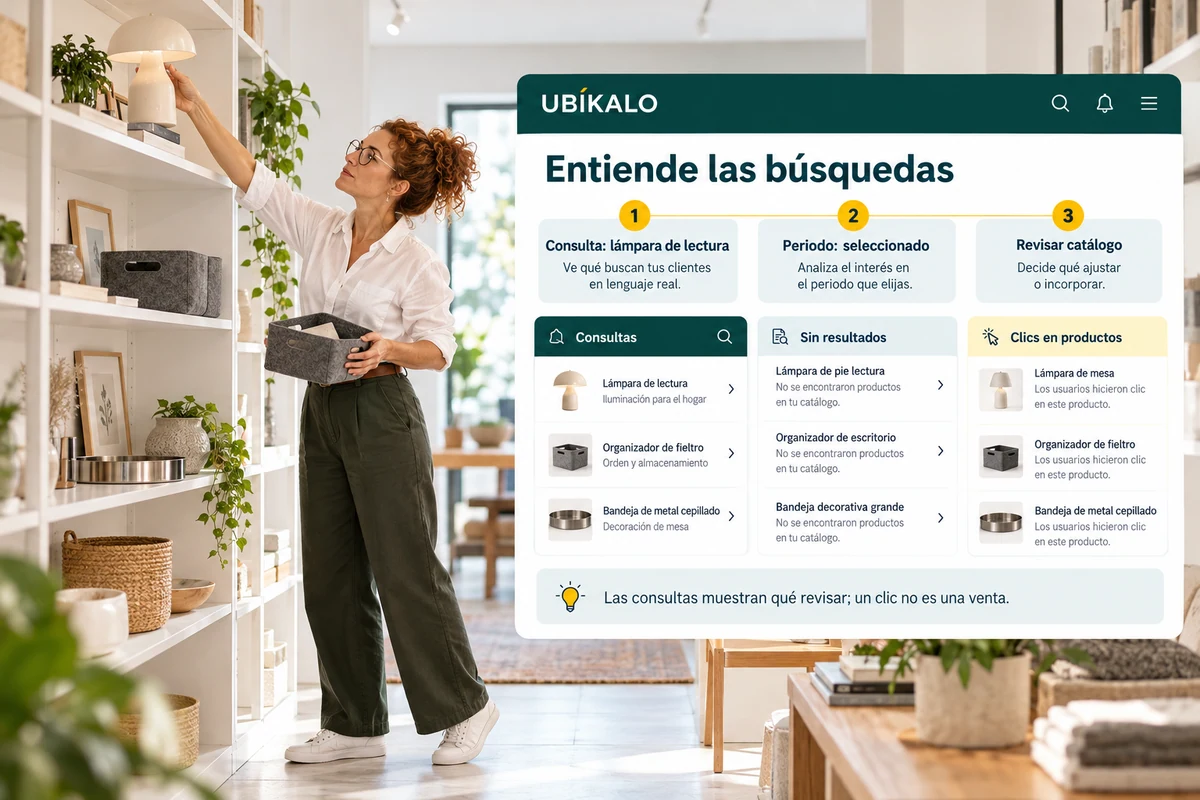
Investigate the inquiries in Spanish you receive from your buyers in Mexico. Compare them with product pages and results before changing the offer.
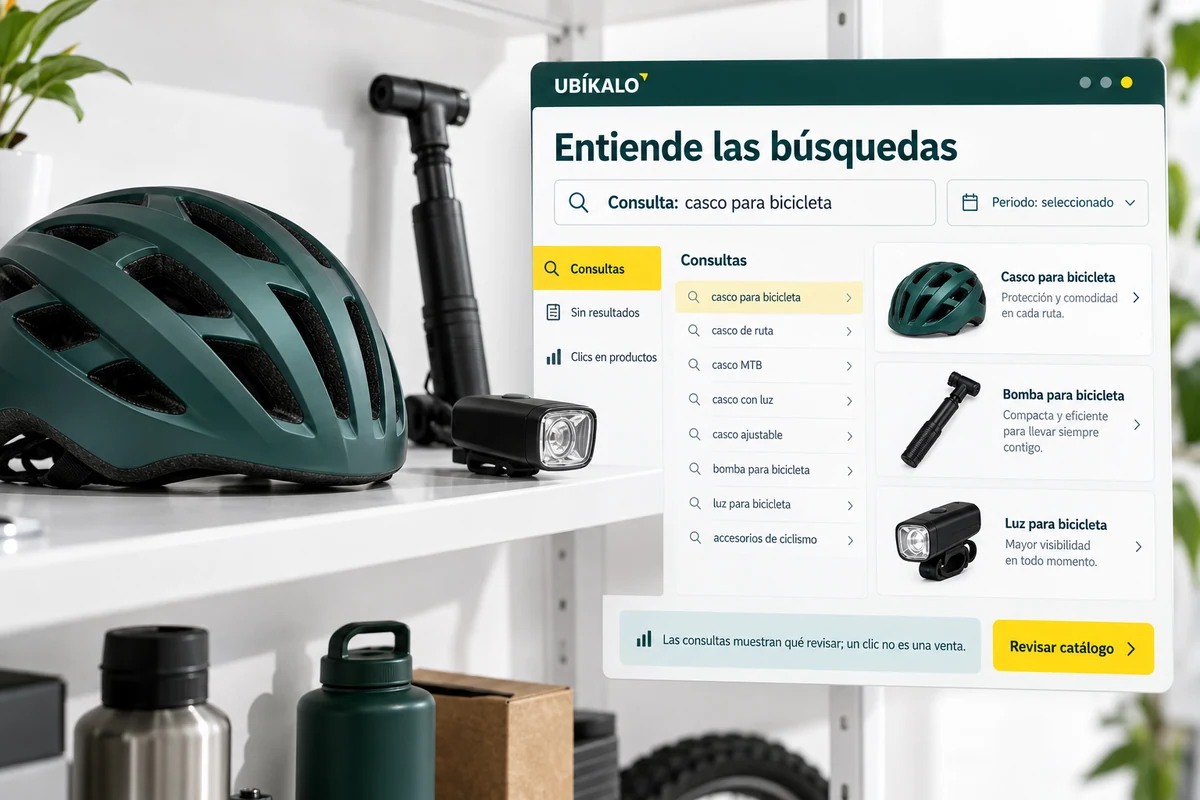
From a query to a specific hypothesis.
Review repeated expressions and their context. A search without clicks may require a clearer description, another selection or simply not correspond to the available offer. Don’t assume a cause without reviewing the results.
Group cases by type of problem: vocabulary, data, availability or conditions. This classification helps to choose between correcting a record, reviewing an equivalence or investigating a new claim.
- Keep the original query.
- Examine the products displayed.
- Classify causes before acting.
A term that is repeated every week
Before adding products, check if the store already sells what people describe with another word. If it exists, check the product page and the equivalence. If it doesn’t exist, retain that evidence for your business decision, without promising quantified demand from a single query.
Explanatory example; It does not consult your account or modify data.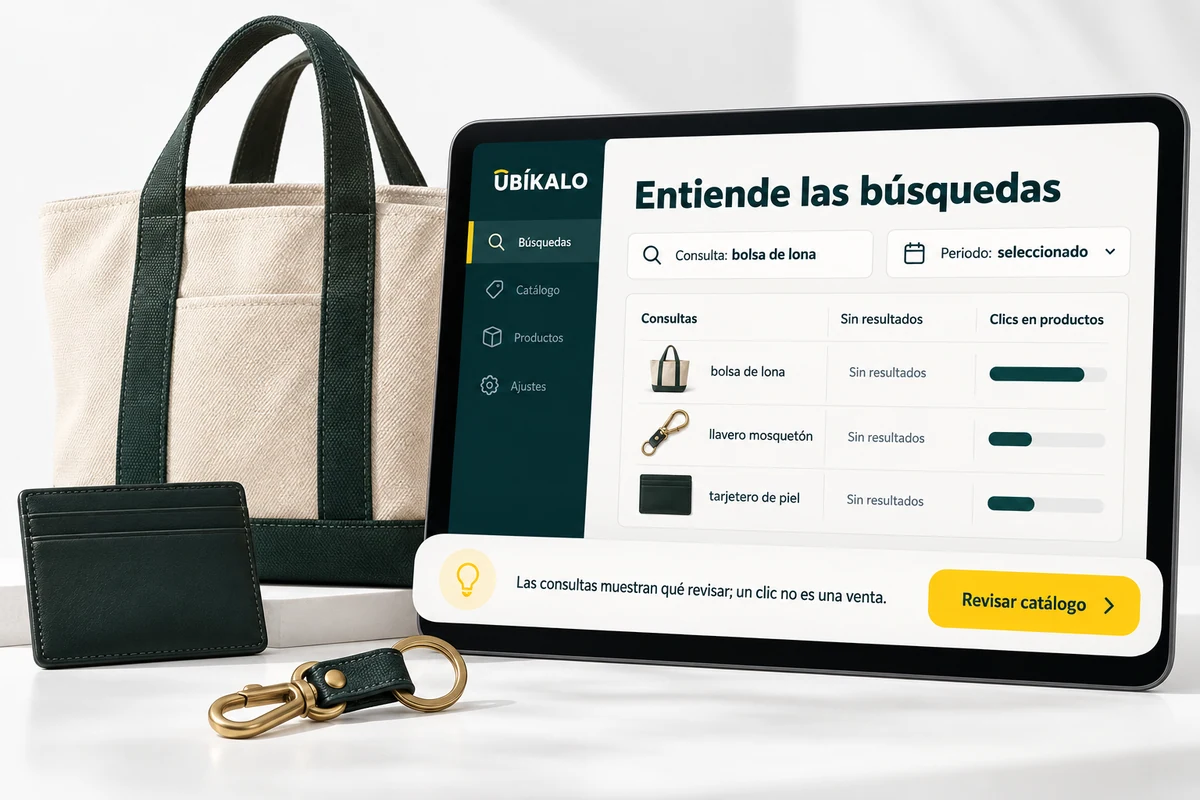
Close the cycle with a new test.
Make a small adjustment and repeat the cases that motivated it. Then look at a comparable period, taking into account traffic and catalog changes.
Reading searches complements reporting and customer service. It does not replace the definition of metrics nor does it allow each signal to be converted into a hypothetical sale. Separates observation, hypothesis and proven result.
- Try the limited shape change.
- Compare similar contexts.
- Document what was verified.
A tour that you can check.
- Select representative queries.
- Investigate one cause per group.
- Try an adjustment and check its evolution.
Questions about understanding searches
Is this the same as looking at total searches?
No. Understanding intent requires reviewing words, conditions, and results, not just volume.
Does a frequent query test purchase demand?
It is a signal that should be contrasted with other sources and with the operation.
Where do I see the reports?
In the authorized analytics of the store, with the period and the corresponding definitions.
See the actual steps and controls.
Settings depend on your account permission, integration, and scope. The guide documents how to locate options without confusing an illustration with a completed trade.
Open the corresponding guide →Take this experience to your business.
Review business options and scope before subscription.
Know the options →I already have an account